
An extra injection and a longer-lasting result sounds like a straightforward proposition. A study published on 8 July 2026 shows why the answer is more complicated. Combining botulinum toxin with a hyaluronic acid skinbooster produced benefits on some measures of crow’s feet. It did not outperform toxin alone on every outcome the researchers examined.
The team led by Ana Claudia Laureano Navarro Shishido studied 24 women in Brazil. Both sides of each participant’s face received botulinum toxin. One randomly selected side later received a skinbooster, while the other underwent a simulated injection. Participants and outcome assessors were intended to remain unaware of which side received the additional product. All women completed six months of follow-up.
Where the combination looked better
At three and six months, participants rated their wrinkles more favourably on the side receiving both treatments. Skin texture measured through an imaging system also favoured the combination at those visits. Satisfaction was higher than with toxin alone at the three-month assessment.
Two findings complicate that picture. The primary outcome, electrical activity in the treated muscle, did not differ between the approaches. The investigators’ wrinkle ratings also showed no statistically significant difference between sides at any assessment. Better results for skin texture therefore should not be translated into a claim that the skinbooster prolonged the toxin’s action on the muscle.
Why the disagreement matters
How someone feels about an aesthetic result matters. But a patient’s perception answers a different question from a muscle recording or an investigator’s assessment of wrinkles. The useful story is the gap between these outcomes: an additional procedure may improve certain aspects of an experience without proving superior across all the goals being measured.
The study was small and included women only. Its findings do not establish the same benefits in men or provide a reliable estimate of uncommon complications. Six months of observation also cannot show what repeated combinations might mean over several years.
In clinical practice, the starting point is which outcome an additional treatment is meant to improve: the patient’s perception, skin appearance or muscle activity. These are different goals. Botulinum toxin and hyaluronic acid are also the two Compact programme subjects listed by Master Class Aesthetics, an education provider for licensed physicians. For clinicians considering such combinations, this trial offers a concrete point of discussion: counselling and treatment planning need to distinguish patient satisfaction from objective measurements. Its findings do not support a blanket recommendation for the additional injection.
The additional procedure had trade-offs
Following skinbooster injections, the researchers reported temporary pain in 29.1% of participants and small bruises in 12.5%. These reactions resolved within two weeks. No serious adverse events were reported, but a trial involving 24 people cannot establish that such events never occur.
For readers weighing the claims made about combined treatments, the study provides a useful set of distinctions. Is the promised improvement about skin texture, satisfaction, visible wrinkles or the duration of muscle relaxation? Which of those outcomes was actually measured, and by whom? Adding a procedure makes those questions more relevant, not less.
The findings offer an informed starting point for discussing expectations. They do not determine which treatment an individual should choose, or turn one small trial into a general endorsement of combining procedures.
Source: Ana Claudia Laureano Navarro Shishido and colleagues, Aesthetic Plastic Surgery, published 8 July 2026; PMID 42420660. Original journalistic analysis and adaptation of research published under CC BY 4.0. Licence: https://creativecommons.org/licenses/by/4.0/
Sources & credits
- Aesthetic Plastic Surgery · PubMed PMID 42420660
- DOI · Association of AbobotulinumtoxinA and Skinbooster for Periorbital Wrinkles: A Randomized, Controlled, Double-Blind, Split-Face Study
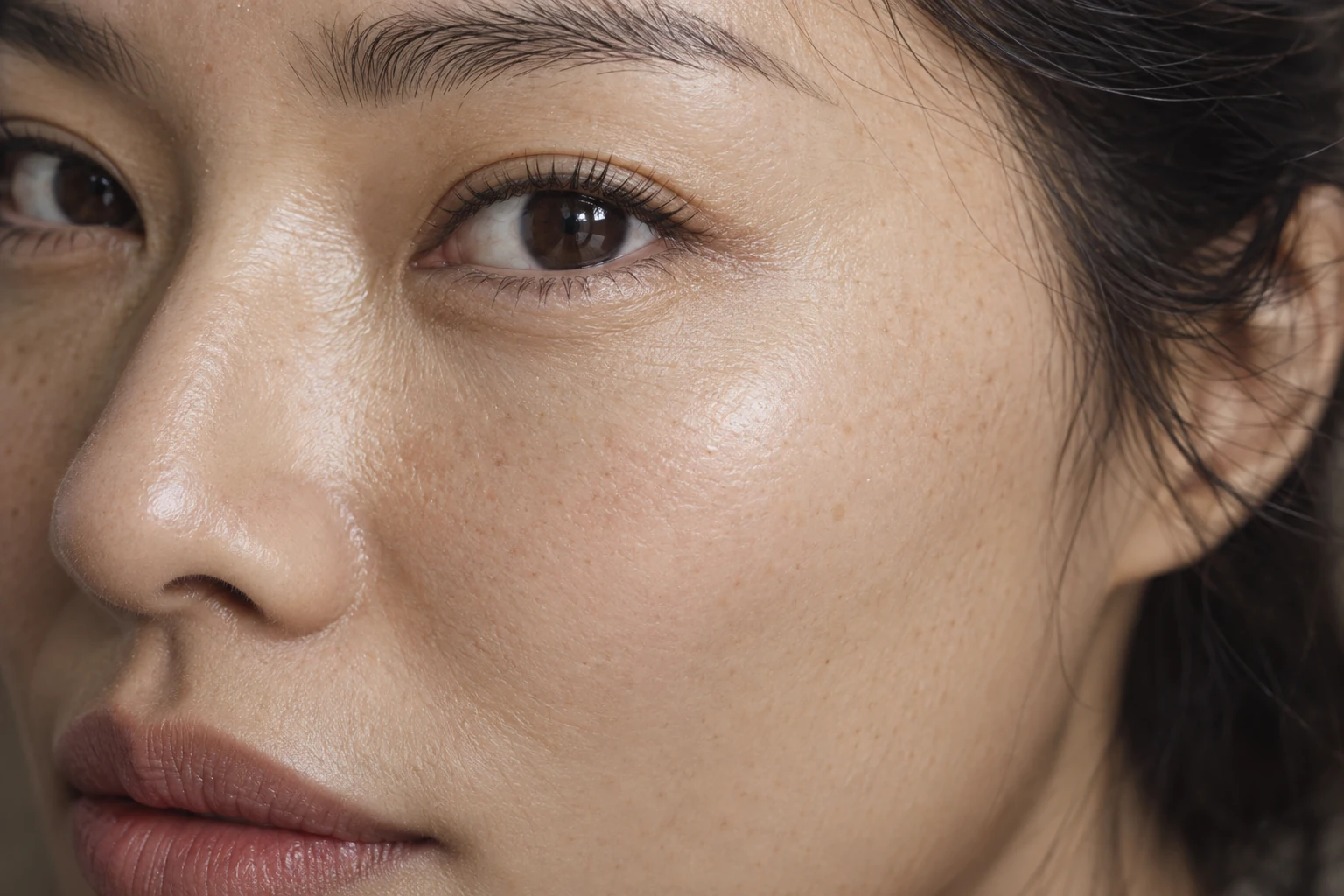
AI-generated symbolic photograph: natural skin texture and fine lines around a fictional woman's eye. Not a study participant or a treatment result.