A newspaper’s opening statement is an invitation to read its contents against a declared purpose. In the first issue of The Medical Times, the section Our Intentions sets out a programme that includes reports of lectures, hospital cases and reviews. English, French and German lectures appear in that proposed repertoire. [S08]
The list matters because it shows selection becoming visible. A lecture, a case and a review are not the same kind of text. They offer different ways of arranging knowledge and inviting attention. Read together as an editorial programme, they raise a question that extends beyond this particular newspaper: what does each form allow a reader to understand?
That question guides our contemporary reading. A report can tell us what was presented; a review can examine what deserves consideration. Their value depends on how clearly the editorial work is made legible. A reader should be able to recognise where the source ends and where an account of it begins.
The international references are another point of interest. Rather than treating the word foreign in a historical newspaper as decorative language, the edition invites a more precise reading: which sources are identified, and how are they brought before this audience? The opening programme is a starting point for that inquiry, not proof that every later issue fulfilled it. [S08]
For Aesthetic Times, this is a productive encounter between archive and present. Current reporting offers immediacy; an annotated historical page offers distance. Used together, they encourage attention to the decisions behind the finished article: selection, explanation and the terms on which a reader is asked to trust a publication.
Our Intentions is therefore more than a period heading. It gives this edition a concrete object for discussion: an editor stating what a journal intends to do. The next step belongs to the reader, who can return to the original page and examine that promise directly.
This feature is contemporary commentary, not a complete transcription or translation of the historical statement.
View the opening page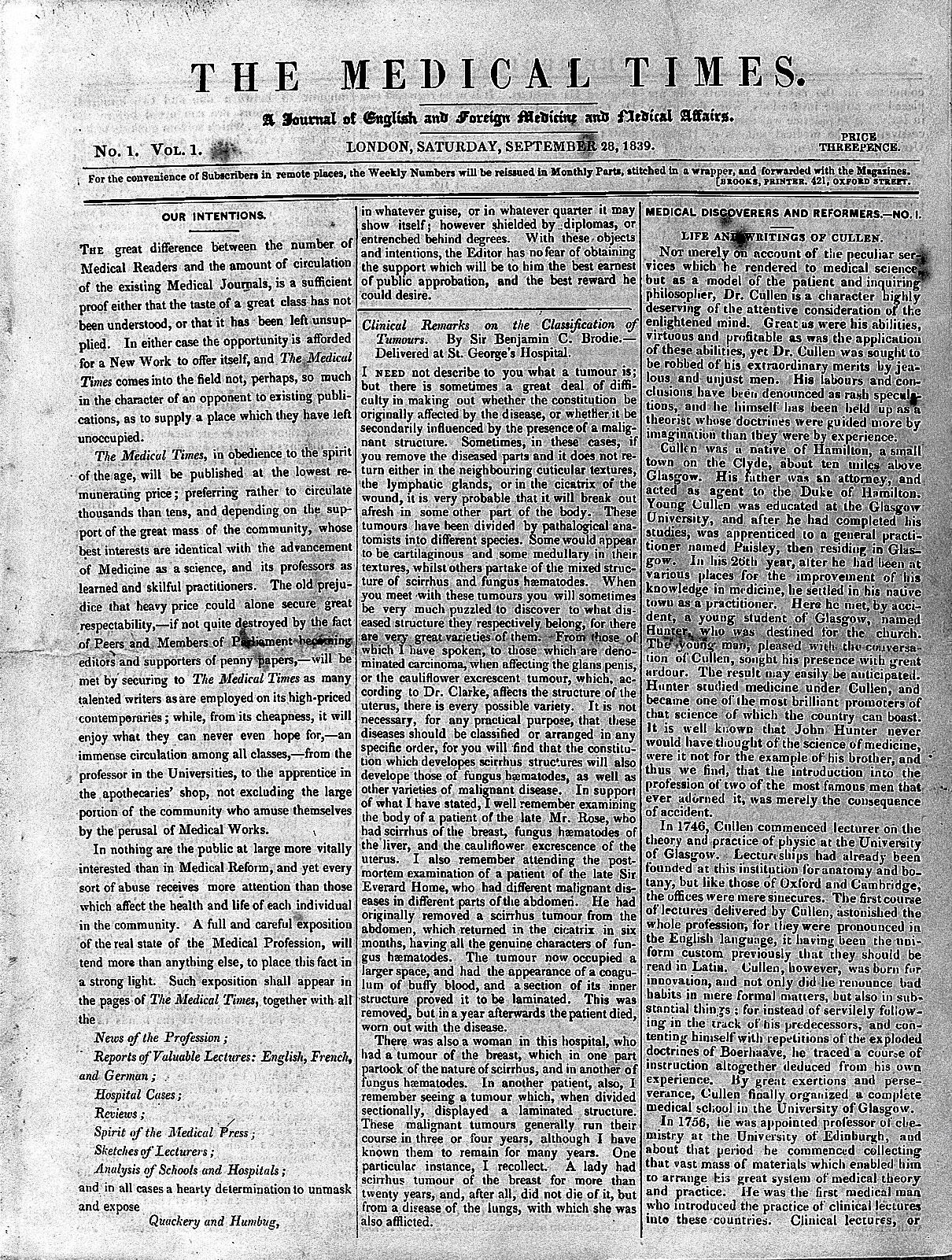
![[S08]](https://iiif.wellcomecollection.org/image/L0025025/full/full/0/default.jpg)