Laser treatment can be part of the approach to depressed acne scars. But what happens when a filler is added afterwards? A Chinese trial involving 160 participants reports better results from fractional CO₂ laser followed by injections of a calcium hydroxylapatite-containing mixture. Its findings also help put the extra treatment steps and recovery burden into perspective.
The study, led by Weiliang Chen and colleagues, was published online in Aesthetic Plastic Surgery on 6 July 2026. Participants at one clinic were randomly allocated to two groups. Both received laser treatment, while one group also underwent two subsequent injection sessions. Results were available for 159 people at the six-month endpoint; one participant in the laser-only group was lost to follow-up.
A larger change in scar scores
The average improvement on the study’s scar-rating system was 10.61 points with the combination, compared with 5.74 points after laser alone. Ratings by blinded assessors and participants’ satisfaction also favoured the combined approach.
Those figures do not mean that scars disappeared by a particular percentage. They describe changes on a scoring system. Within the combination group, broader boxcar and rolling scars responded better than narrow, deep icepick scars. Scar type therefore matters when interpreting the results; the trial does not establish an identical benefit for every pattern of scarring.
An important detail in the mixture
The methods reveal a qualification that a headline can easily miss. The injected preparation included non-crosslinked hyaluronic acid as well as calcium hydroxylapatite. This was a test of a particular combined protocol with extra treatment sessions. It cannot isolate how much of the benefit came from calcium hydroxylapatite itself, or demonstrate the same outcome with every commercially available filler.
The trial was conducted at a single centre and its main comparative endpoint was six months after the laser procedure. Longer-term durability and uncommon or delayed adverse effects need further investigation.
When injections are added to laser treatment, choosing a practitioner should take both parts of the procedure into account. What experience does the clinician have with the combined approach, and how is aftercare organised? Trusted Ones lists treatment type, qualifications and aftercare as criteria for its treatment-specific doctor selection. This trial shows why these questions deserve concrete answers: any potential additional benefit comes with extra treatment steps and the bruising reported in the study. A consultation therefore needs to address expected improvement, the additional burden and care if adverse effects occur.
Recovery was part of the trade-off
Pain, redness, swelling and crusting occurred following treatment. In the combination group, 28 of 80 participants, or 35%, experienced bruising after injections. The bruises resolved without additional intervention within one to two weeks.
Prolonged redness and pigmentation changes occurred at similar rates in the two groups. When present, they cleared sooner on average in the combination group. That finding is different from demonstrating that the extra procedure prevents those reactions from occurring.
For a general reader, the useful questions are concrete: Which scar types were studied? How much did the assessment scores change? And how many appointments, along with how much recovery, were involved? A better average score is one part of the decision, rather than a complete description of the experience.
This study adds evidence about a specific treatment sequence. It does not choose a procedure, product or practitioner for an individual, and it should not be presented as a promise that acne scars will disappear.
Source: Weiliang Chen and colleagues, Aesthetic Plastic Surgery, first published online 6 July 2026; PMID 42410192. Original journalistic analysis and adaptation of research published under CC BY 4.0. Licence: https://creativecommons.org/licenses/by/4.0/
Sources & credits
- Aesthetic Plastic Surgery · PubMed PMID 42410192
- DOI · Calcium Hydroxylapatite Combined with CO2 Ablative Fractional Laser for Atrophic Acne Scars: A Randomized Controlled Study
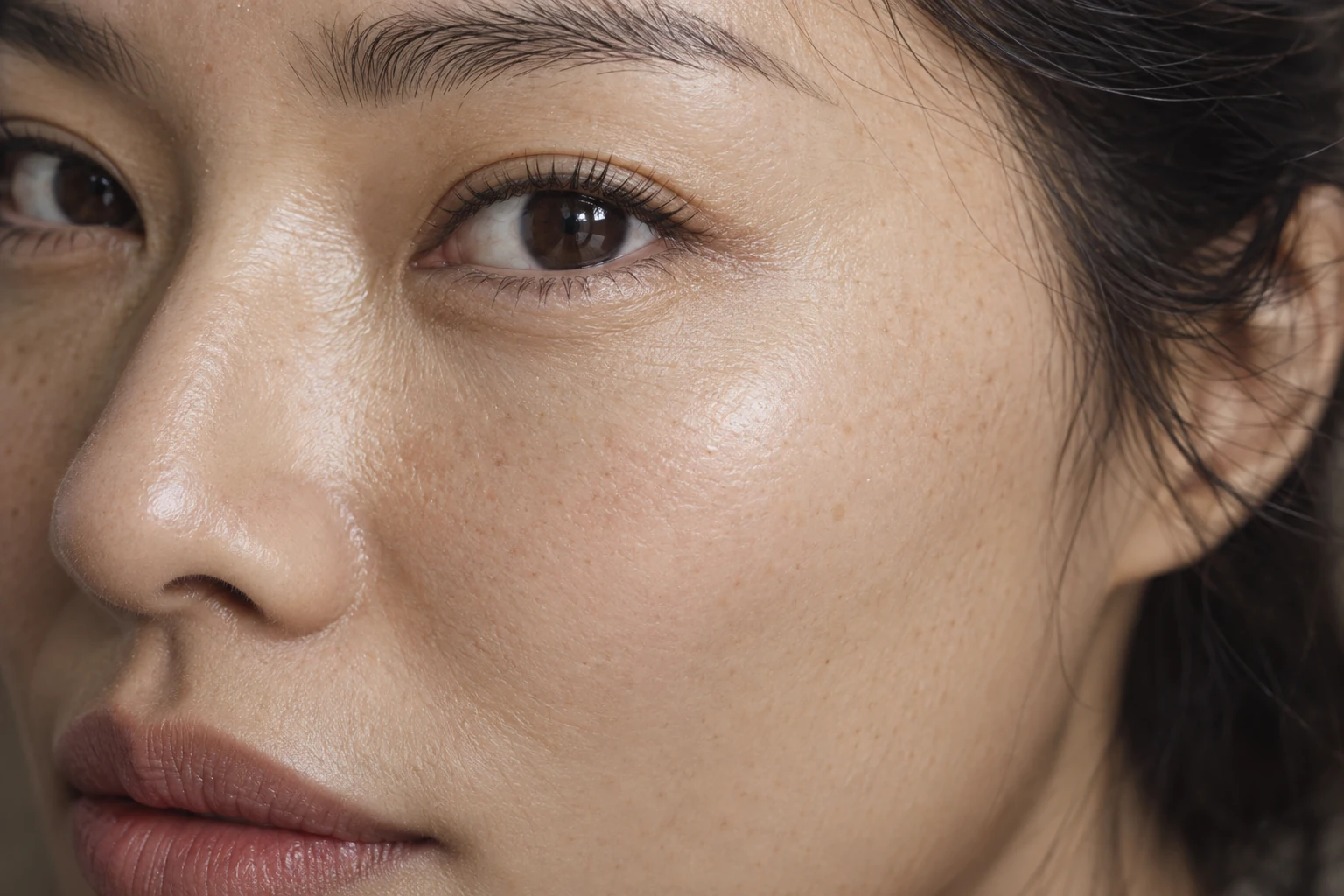
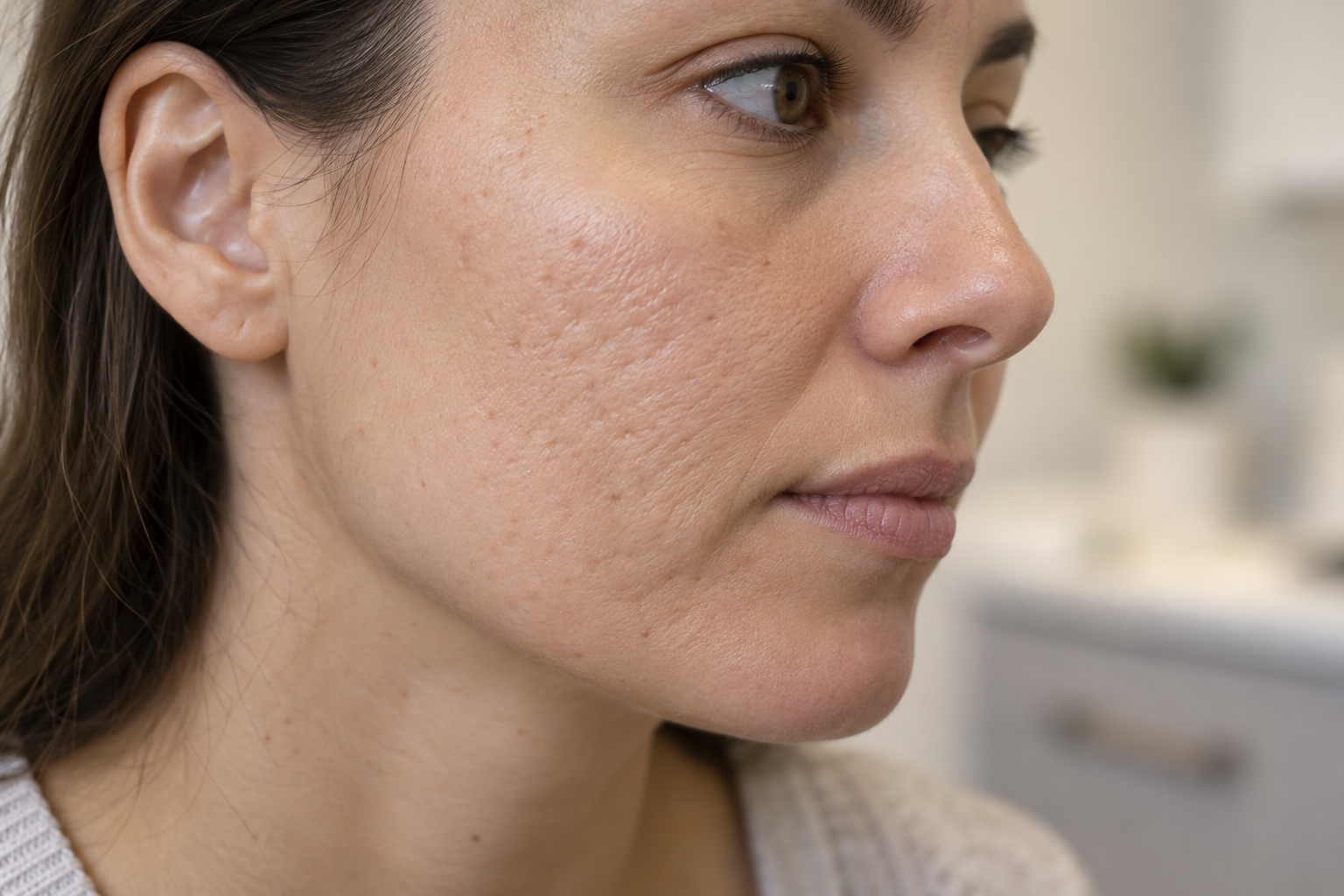
AI-generated symbolic photograph: a fictional woman with subtle acne-scar-like indentations on her cheek. Not a study participant or a treatment result.